



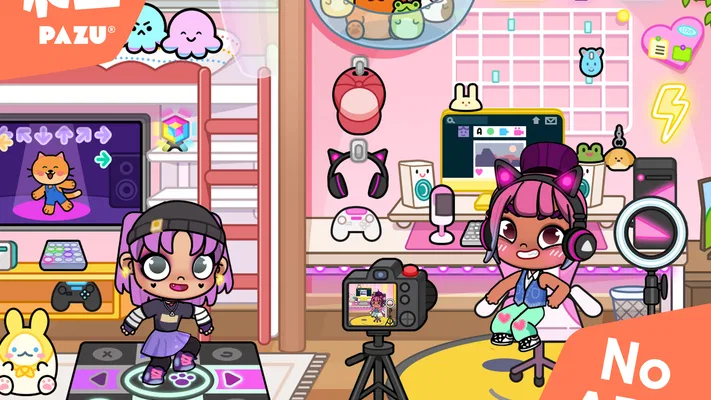
 Analysis by Gamescozy
Avatar World is a role-playing game built around creating a character and exploring a playful world at your own pace. I’d recommend it to someone who wants an open-ended, low-pressure game rather than a quest with strict objectives. Its simple premise is part of the appeal, but it also means new players may need a little time to work out what they can do and where to begin.
Getting started without getting stuck
My first practical tip is to treat the opening session as a tour, not a test. Look around, try the visible interactions, and give yourself time to understand how the game responds. In a world designed for imaginative play, it is easy to assume there must be a specific task to complete. That expectation can make the experience feel confusing when the fun is actually in deciding what to explore or act out.
If a child is playing, a short introduction together can make the first few minutes smoother. I’d show them how to move around and interact with the parts of the world that catch their eye, then let them choose what happens next. This avoids turning the game into a tutorial lecture while still helping them get past the initial uncertainty.
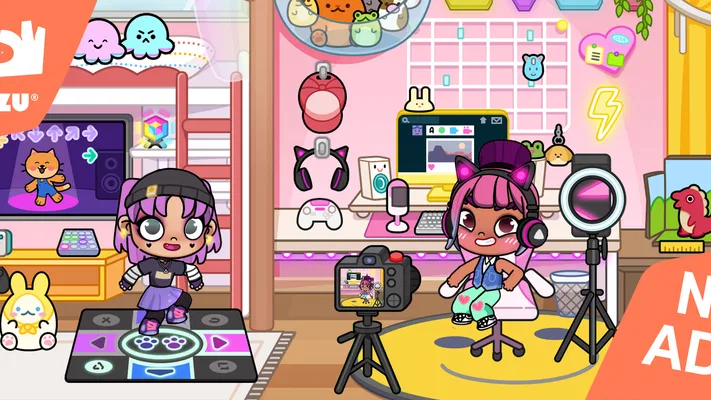
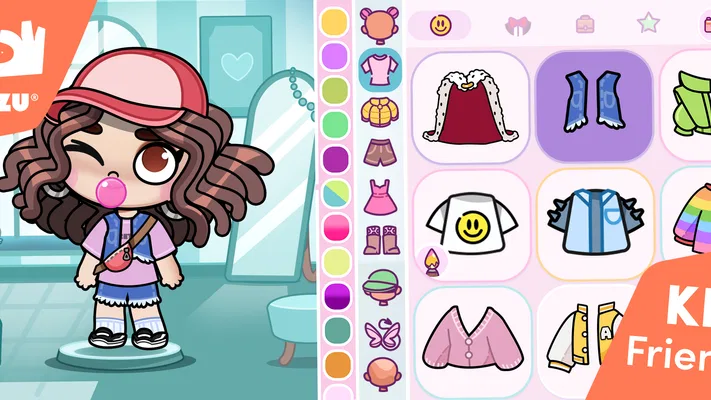
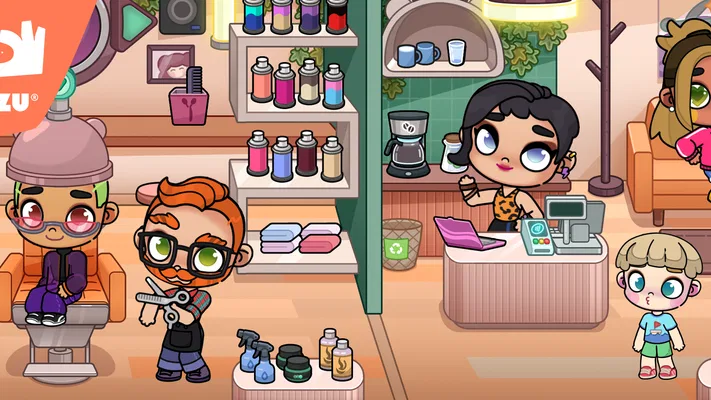
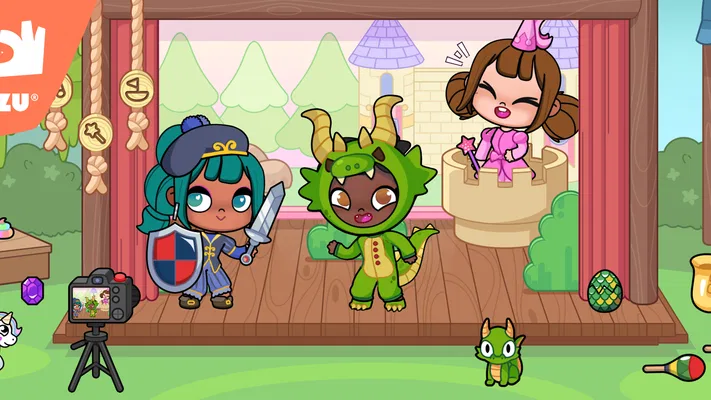
The best way to approach Avatar World is as a digital play space, not a conventional role-playing campaign. That distinction matters. Players who want battles, a tightly guided story, or a clear sequence of missions may wonder what they are meant to accomplish. Players who enjoy making up their own scenes are more likely to settle in quickly.
Small checks before a play session
On Android, the minimum operating system is version 7.0. If the game will not install or launch, I’d first check that the device meets that requirement and that there is enough free storage for an installation and its normal operation. Then I’d close other apps and try again. These are basic checks, but they are more useful than repeatedly tapping an unresponsive icon.
The game is free to download, with in-app purchases ranging from $0.99 to $59.99 per item. That makes it sensible to agree on purchase expectations before handing a device to a child. I would also check the device’s purchase controls with the adult who manages it; that is a general device-setting precaution, not a game feature. A free starting point can still lead to purchase prompts or paid choices, so it is worth making the boundary clear in advance.
Avatar World is rated Everyone, which makes its intended audience broad, but an age label is not a substitute for a parent’s own judgment about how a child uses a device. I’d consider the child’s comfort with independent play and in-app purchases as well as the rating. If the device is shared, agreeing on a time limit and who is allowed to make purchases can prevent avoidable arguments later.
Recovering when a session goes wrong
If the game freezes or stops responding, I’d take the simplest route first: wait briefly, close the app, and reopen it. If the issue returns, restart the device and check for an available game or operating-system update. The current version is 1.226, so keeping the installed copy current is a reasonable troubleshooting step. I would avoid deleting the game as an early fix, especially if a child has been playing for a while; first consider whether any progress or settings might be affected by removing an app.
When an interaction seems not to work, try tapping a different area or moving away and returning, rather than repeating the same action rapidly. This is a useful general approach for touch-screen games: it helps distinguish a missed input from a temporary slowdown. If the whole device is lagging, close other open apps and check whether the problem is specific to Avatar World before changing anything else.
For a child who says, “It’s broken,” I’d ask what they were trying to do and what happened just before the problem. That turns a vague complaint into something you can test: perhaps the game is slow, perhaps the wrong spot was tapped, or perhaps the child expected a goal that the game does not provide. It also avoids promising that a particular action will unlock something when the game’s open-ended style may not work that way.
When the game may not be the cause
Not every interruption points to a problem inside the app. A device running short on storage, a weak connection, an operating-system mismatch, or a background process can affect how games install and run. I’d check whether other apps are also slow, whether the device has room available, and whether the operating system meets the minimum requirement before deciding that Avatar World itself is at fault.
If the game starts normally but a child is unhappy because they cannot find a particular activity, that may be an expectation mismatch rather than a technical fault. This is where the comparison with more structured role-playing games is useful: those often tell players what to do next, while Avatar World is better suited to free-form exploration. If a player needs explicit goals to stay engaged, a quest-led alternative may be a better fit.
Likewise, if the main concern is spending, the most effective first step is to manage purchases through the device and set clear household rules. The game’s free entry does not mean every choice is free, and the listed purchase range is broad enough that a child should not be left to guess what is allowed. I’d treat this as a family setup decision rather than something to troubleshoot by reinstalling the game.
How it fits into everyday play
A realistic use case is a short break after school: a child opens the game, chooses something to explore, and makes up a scene rather than trying to finish a level. For that kind of session, the lack of pressure can be a strength. There is no need for a parent to guide every move once the child understands the basic interaction style, although younger players may still appreciate an adult nearby at the beginning.
Another useful approach is to let the child narrate what they are doing. Asking them to explain the scene gives the play a natural focus without imposing a goal the game may not supply. If they lose interest after a few minutes, that is useful information too: the open-ended format may not be as engaging for them as games with puzzles, timed challenges, or a clear story arc.
Compared with many role-playing games, this one is less about building toward a final outcome and more about using the setting as a place for imaginative play. That makes it approachable for players who do not want complicated rules, but it can feel light on direction to anyone seeking a substantial campaign. I’d choose it for creativity and relaxed exploration, not as a replacement for a story-driven adventure.
Who is likely to enjoy it
I think it is a good match for children and casual players who enjoy inventing characters, scenes, and little stories without needing to win. It can also suit a parent looking for a game that is easy to sample before deciding whether it belongs in a child’s regular rotation. Pazu Games is the developer, and the game’s broad reach is reflected in its 100 million-plus installs.
Its audience response is strong: it has a 4.7 average from around 6.7 million ratings, alongside about 75,000 written reviews. Those figures are reassuring as a sign that many people have tried it, but they do not guarantee that every player will enjoy its open-ended approach. I’d use them as context, then decide based on whether free-form play is what the person actually wants.
I would skip it if I were shopping for a traditional role-playing experience with a clear plot, strategic combat, or a steady chain of objectives. I’d also think twice if a player becomes frustrated without frequent instructions, or if in-app purchases would create conflict on a shared device. In those cases, a more structured game or one with a purchase model that better suits the household may be the calmer choice.
My practical verdict
Avatar World works best when I let it be what it is: a flexible place for make-believe rather than a game to rush through. Its free download lowers the barrier to trying it, and its Everyone rating makes it accessible to a wide audience, while the optional purchases are a reason to set expectations before play. The original release was on December 12, 2022, and the current version is 1.226.
My recommendation is to give it a brief, guided first session, check that the device meets the Android requirement if installing there, and then let the player take the lead. If they enjoy exploring and inventing their own reasons to play, it can be a satisfying casual choice. If they keep asking what the next mission is, that is probably a sign to choose a more goal-driven role-playing game instead. For the right player, its freedom is the point; for the wrong one, that same freedom can feel like a lack of direction.